MYOFASCIAL THERAPIES
The focus for a Doctor of Chiropractic is to take a holistic approach to optimize the nervous systems flow to the entire body, despite the many demands we put our body through each day.
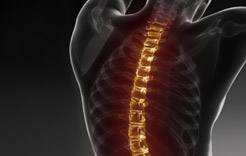
The nervous system attempts to hold our spine aligned by activating muscles to stabilize the bones. Muscles are connected to adjacent muscles by a tissue called fascia. When one muscle is activated, the others around it are pushed or pulled upon and an overuse or imbalance can lead to injury. Fascial planes travel from the top of your head to the bottom of your feet and from one small muscle to another.
There are several techniques that have been developed to address myofascial injuries. Such techniques are Myofascial Release Therapy – MFR, Active Release Therapy – ART, Instrument Assisted Soft Tissue Mobilization – IASTIM to name a few. These techniques target adhesions in overused or injured muscle and fascial tissues. Your Doctors and therapists at Advanced Sports and Family Chiropractic + Acupuncture can help you determine what the best course of care is for you.
How does a Fascial Injury Occur?
The most common injury occurs when the bones in the body are misaligned, causing an imbalance of muscle firing or abnormal biomechanics. Sometimes, we will see an extreme where muscles are overworked due to being in a constant contraction state from unstable joints. This is most common with people who have sustained ligament or tendon injuries but can also come from repetitive injuries which lead to poor posture. For example, someone whose head is in a forward position from an abundance of texting, called “text neck,” leads to reversed cervical curves. A person who las leg length imbalances has a constant torque and twist of the pelvis. People who sit at an unergonomic desk and chair at work or home can lead to neck, back, arm and hip issues, etc…
How can Fascial Injuries be Healed and the Body Strengthened to Avoid Reinjury?
That answer is very specific to individuals. A full body assessment is required for proper diagnosis. Most of the time, the correction is through a series of specific chiropractic adjustments of the bones, myofascial work on dysfunctional muscle and fascia tissues, followed by proper prescribed exercise to strengthen underused muscles. By addressing each system, we can improve stability and correct the joint and myofascial function for the long term. This allows people to live without aches, pains, or the threat of not being able to maintain favorite activities in the years to come.
What does it feel like to receive a Myofascial Release Therapy?
Patients are put through a specific range of motion in order to shorten a muscle, target an adhesion (some may feel as knots or tender points along a muscle), and lengthen the muscle. Thus, breaking up the adhesion, increasing the flexibility / strength of the muscle, and allowing proper physiology of the muscle.
The relief can be both immediate and in time. Some adhesions in or between muscles may have nerves nearby which become entrapped and become very chronic and painful. Examples of this are often found in carpal tunnel, tension headaches, and anterior thigh pain / numbness, shin splints and calf pains. Patients often describe this treatment to be “tender” during the process but feel almost instant release and improved movement post treatment.
Important Message from ASFCA
The doctors of ASFCA want to stress that each patient should be assessed individually by a Chiropractor who has taken advanced training in areas such as Certified Chiropractic Sports Physician® or taking courses in ART, or IASTIM. Certified doctors will have these letters at the end of their name:
Dr. Bradley Woodle: DC, CCSP, FASA, CSCS
CCSP: Certified Chiropractic Sports Physician
FASA: Fellow of the Acupuncture Society of America
CSCS: Certified Strength and Conditioning Specialist
Schedule an Appointment – We are here to help you!
Overland Park, KS Clinic
6701 W. 121st Street | Suite 200
Overland Park, KS 66209
913-643-1771
913-643-1775
Olathe, KS Clinic
10454 S. Ridgeview Rd.
Olathe, KS 66061
913-689-2333
913-689-2334
Prairie Village, KS Clinic
4121 W. 83rd St. | Suite 147
Prairie Village, KS 66208
913-490-4444
913-490-4445
Raytown, MO Clinic
10803 E State Rte 350 | Suite B
Raytown MO 64138
816-356-9313
816-831-3601
Lee's Summit, MO Clinic
338 Southwest Main St.
Lee's Summit, MO 64063
816-600-5483
816-524-5328
Belton/Raymore, MO Clinic
17027 Bel-Ray Blvd.
Belton, MO 64012
816-425-7015
816-425-2117
Blue Springs, MO Clinic
622 SW US 40 Hwy
Blue Springs, MO 64014
816-815-7007
816-815-7008
Liberty, MO Clinic
1520 N. Church Rd | Suite C
Liberty, MO 64068
816-831-3600
816-831-3601

Be a Wellness Warrior!
Stay informed with ASFCA wellness news, upcoming events & patient appreciation specials.

Top Rated Clinics

ASFCA on Facebook

Advanced Sports & Family Chiropractic & Acupuncture
We are a team of dedicated doctors and staff whose mission is to get you to wellness! Give us a call to start your health care journey!
Each spinal nerve communicates critical information between your brain and body. A well functioning spine (with the help of regular chiropractic adjustments) helps your spinal nerves function optimally!
2 CommentsComment on Facebook
Do you have Hypothyroidism or Hashimoto’s or wonder if you do- We can help!
With our specific Blue Print protocol, and high power red light therapy we can help you regain your health- sign up to see one of our drs today!
1 CommentsComment on Facebook
Want a At Home Tool to MAXIMIZE your results and keep you well?
Conventional home recovery protocols typically require 20-30 minutes, twice daily.
TheraRay introduces a state of the art approach by shifting the variable from time to power.
With an output of 15W (15,000 mW), treatment times are significantly reduced to 30-60 seconds per area, unlike inferior foreign light pads that require hours and fail to penetrate deeply.
TheraRay's innovative design targets joints, nerves, lymphatics, organs, and muscles in a single device.
Utilizing a prescription-only, provider-guided protocol, this clinical-grade technology is specifically designed for at-home use to maximize results and seamlessly integrate into one's lifestyle.
TheraRay effectively bridges the care gap between visits, where outcomes often lag.
Consult with your doctor at ASFCA to determine if TheraRay would be beneficial for you.
Visit www.TheraRay.org for more information.
www.theraray.org
TheraRay™ The Science of Scalable Recovery Prescription-Only, High-Power Infrared Therapy. Short Sessions. Scalable Recovery. Recovery does notend when the patientleaves the clinic. TheraRay is buil...0 CommentsComment on Facebook