Active Release Therapy – Active Release Technique or ART®
What is Active Release Therapy?
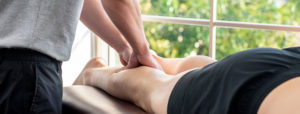
Active Release Therapy, commonly called Active Release Technique or ART® helps break up dense scar tissue and adhesions that are causing pain and limiting range of motion. Adhesions are fibrous bands that form between tissues and organs, often as a result of injury or surgery. They may be thought of as internal scar tissue that connects tissues not normally connected.¹ Active Release Therapy not only breaks up scar tissue, but it increases blood flow and oxygen to the injured area to aid in healing.
How Does Active Release Therapy Work?
Active Release Therapy works by targeting the area where pain and dysfunction is coming from. After an injury, the body heals itself and often there is scar tissue and adhesions that cause pain and limit range of motion. Chiropractors or sports therapists will do active release therapy to break up the scar tissue and adhesions. Most people state they feel immediate relief with one session.
A case study from the Journal of the Canadian Chiropractic Association followed a 51-year old male who played recreational tennis. The patient was initially treated with physical therapy, an elbow strap and corticosteroid injections. In about a months’ time, the patient returned; and described a return of the pain as the worst pain he has ever felt. The patient was later diagnosed with lateral epicondylosis (Tennis Elbow) with a myofasciopathy (muscle weakness) of the extensor carpi radialis brevis (forearm muscle). He was treated six times over two weeks with Active Release Technique® (ART) to the affected muscles. After the first treatment the patient reported to feel 80% better, and at the time of discharge there was complete resolution of his symptoms (VAS 0/10 with no pain provocation on examination). The patient returned to playing tennis and at one- and two-month follow-ups he had no pain.²
Active Release Therapy not only breaks up scar tissue and adhesions, but it also assists with the lymphatic system. When an area of the body becomes injured, the body naturally builds up fluid around the injury to protect it. This natural swelling can lead to increased pain and discomfort. The treatments used to break up the tissue, also assist to move the lymphatic fluid throughout the body. The treatment engages the lymphatic system which removes the liquid causing the inflammation within the tissue. The lymphatic system is a network of tissues and organs that help rid the body of toxins, waste and other unwanted materials.³
Active Release Therapy Treats:
- Lower Back Pain
- Headaches
- Carpal Tunnel Syndrome
- Strains and Sprains
- Tennis Elbow
- Plantar Fasciitis
- Sports Injuries
What Other therapies can be Paired with Active Release Therapy?
We at ASFCA do not only treat the cause of the pain, but the body as a whole. When an injury occurs, there is always compensation with how a person walks, stands and carries themselves. Our treatments are meant flow together and give a whole-body holistic care and healing.
- Chiropractic
- Acupuncture
- Cold Laser Therapy
- Physical Therapy Services (Physiotherapy)
- Myofascial Therapies
- Ultrasound Therapy
We have successfully treated many issues by not only relieving the pain, but what is causing the pain and discomfort. Active Release Therapy is not for everyone. Your chiropractor will discuss with you a plan for relieving your pain and increase muscle strength to prevent further injuries.
Pain is not a lifestyle! Go out and live pain free.
¹ Adhesion (medicine). (2018, November 7). Retrieved from https://en.wikipedia.org: https://en.wikipedia.org/wiki/Adhesion_(medicine)#cite_note-1
² (2006). Lateral epicondylosis: a case study of conservative care utilizing ART and rehabilitation. The Journal of the Canadian Chiropractic Association, 50(3), 182-9.
³ Zimmermann, K. A. (2018, February 20). Lymphatic System: Facts, Functions & Diseases. Retrieved from https://www.livescience.com: https://www.livescience.com/26983-lymphatic-system.html
Schedule an Appointment – We are here to help you!
Overland Park, KS Clinic
6701 W. 121st Street | Suite 200
Overland Park, KS 66209
913-643-1771
913-643-1775
Olathe, KS Clinic
10454 S. Ridgeview Rd.
Olathe, KS 66061
913-689-2333
913-689-2334
Prairie Village, KS Clinic
4121 W. 83rd St. | Suite 147
Prairie Village, KS 66208
913-490-4444
913-490-4445
Raytown, MO Clinic
10803 E State Rte 350 | Suite B
Raytown MO 64138
816-356-9313
816-831-3601
Lee's Summit, MO Clinic
338 Southwest Main St.
Lee's Summit, MO 64063
816-600-5483
816-524-5328
Belton/Raymore, MO Clinic
17027 Bel-Ray Blvd.
Belton, MO 64012
816-425-7015
816-425-2117
Blue Springs, MO Clinic
622 SW US 40 Hwy
Blue Springs, MO 64014
816-815-7007
816-815-7008
Liberty, MO Clinic
1520 N. Church Rd | Suite C
Liberty, MO 64068
816-831-3600
816-831-3601

Be a Wellness Warrior!
Stay informed with ASFCA wellness news, upcoming events & patient appreciation specials.

Top Rated Clinics

ASFCA on Facebook

Advanced Sports & Family Chiropractic & Acupuncture
(opens in a new tab)We are a team of dedicated doctors and staff whose mission is to get you to wellness! Give us a call to start your health care journey!
Just start making new choices that will support your future self ⭐
0 CommentsComment on Facebook
Make the time for your health now, or you will be forced to make time for your illness later!
0 CommentsComment on Facebook
